Choose how to take part
Review eligibility, consent, and study requirements before deciding. Browser-compatible studies can work without an install; other activities need the phone app.
Read the guide : Choose how to take part ↗For participants
Your time, energy, and questions matter. Follow supported study activities from home and explore your own health patterns over time. Your experience can contribute to a bigger picture of complex chronic illness. Check each study’s remote arrangements and local services, including any blood draws or sample collections.
Personal trends, individual test results, and overall study findings are different. Each study explains what it plans to return and when. Taking part is your choice.
iOS TestFlight and Android testing access. Study availability varies. Product screens below are illustrative.
How it works
Review the activities, typical and busiest weeks, visits, and eligibility requirements. A study link or QR code starts screening and consent; it does not guarantee enrollment.
Complete the activities assigned by your study. Supported questionnaires can save your progress, and health sharing depends on your permissions and device.
Explore personal trends and read a summary when the research team releases one. Individual test results are separate: each study explains what it will return and when.
Look beyond the diagnosis: consider the symptoms and questions that matter to you, the typical and busiest weeks, physical or cognitive demands, and support you might need. Scheduled activity time does not include travel to local services, waiting, kit handling, or recovery.
Ask which activities you can complete in the app, through a secure web link, or by phone or video. SMS and email reminders are separate from completing an assessment. An offered channel depends on the study’s arrangements.
Three ways to take part
A study can ship you the treatment, follow the one you and your clinician already chose, or be one you design yourself. Whichever door you walk through, review the study type, eligibility, consent, data sharing, and support arrangements. A personal self-trial is different from an investigator-supervised clinical trial.
Randomized · May be placebo-controlled
Some studies send the investigational drug straight to your door. You might receive the real thing or a placebo — that’s how the study earns an answer everyone can trust — and you’ll know exactly how it works before you consent.
Browse open studiesObservational · Real-world data
Already taking a therapeutic your clinician prescribed? An eligible observational study can collect check-ins and supported health records about that experience. Treatment decisions remain with you and your clinician; the protocol defines what participation involves.
Common questionsN-of-1 · You are the whole study
Structure observations about a routine, pacing change, or a question you discuss with your clinician. Single-subject analysis and uncertainty help distinguish a possible pattern from a reliable finding; they do not establish treatment safety or effectiveness.
How self-trials workBuilt for hard days
TrialPilot was shaped by people living with energy-limiting illness. Supported assessments can be saved and resumed, and connected health records can reduce manual entry. Study windows and device permissions still determine what is collected.
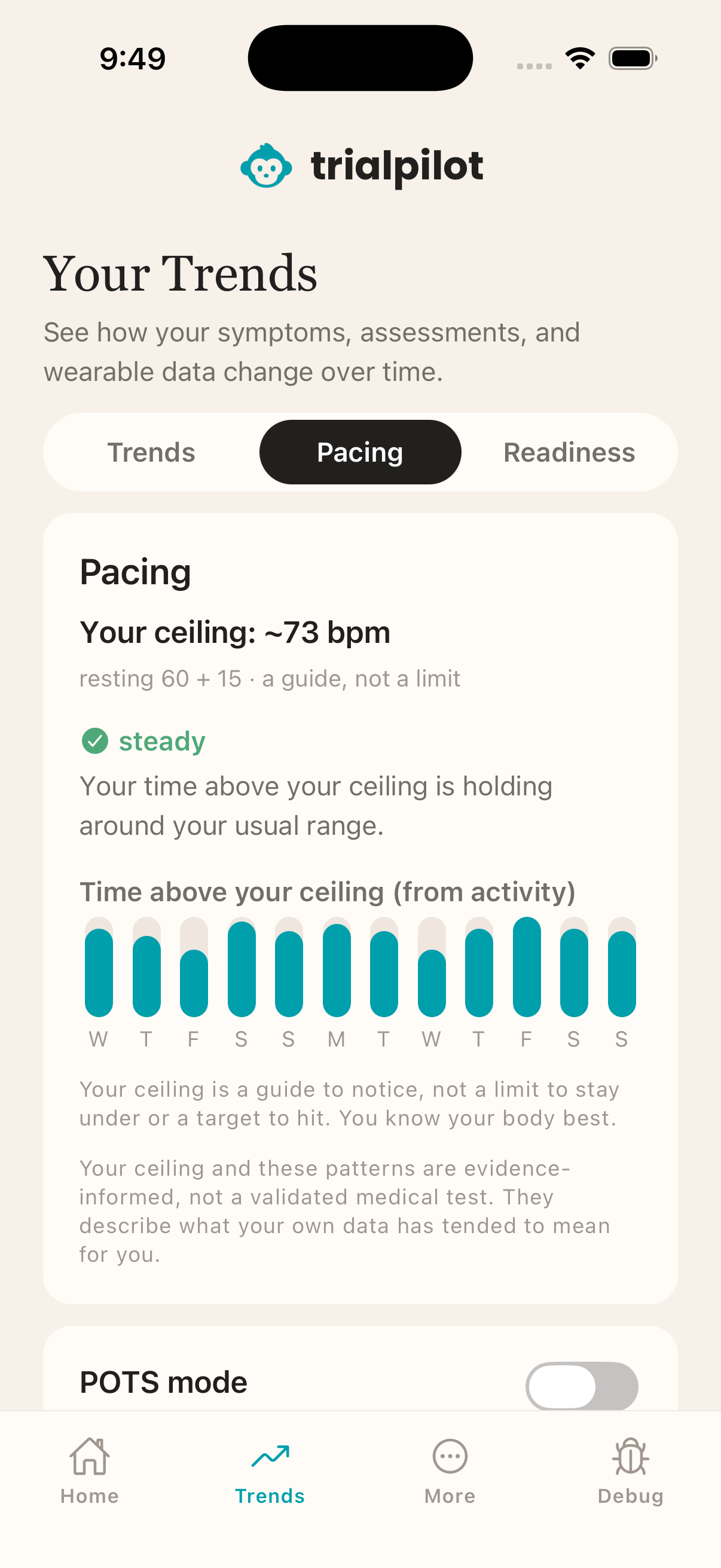
Review pacing observations alongside your available heart-rate data and personal settings. These are patterns to discuss with your clinician, not exercise targets or medical advice.
Log symptoms and post-exertional worsening without losing the wider timeline. Review notification settings and ask your study team what to do when illness affects a scheduled activity.
Can’t wait for the next study?
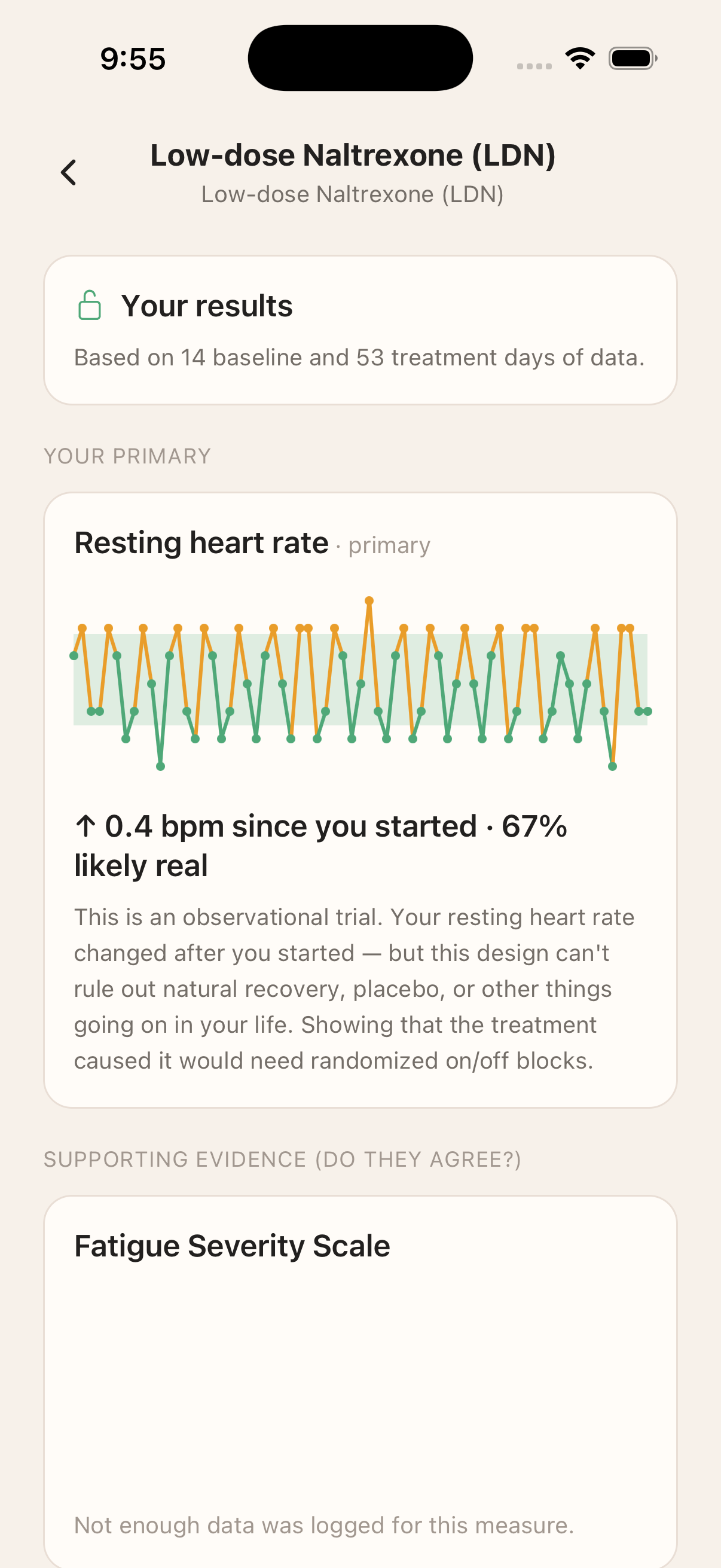
Self-Trials let you organize a question that matters to you — a pacing change or a new routine — with a defined plan, repeated observations, and single-subject analysis. Read patterns alongside missing data and uncertainty. Discuss treatment changes with your clinician; a personal trend is not proof of effectiveness.
Your data, your call
Who you are lives apart from your clinical data by design — so research can happen without your name riding along with it.
Review the sharing choices available for your self-trial and the consent terms of any study you join. Personal sharing settings and study data obligations are different.
Read trends alongside data freshness, missing observations, and uncertainty. Use your study’s reporting and contact instructions for safety concerns.
Purpose-built for Long COVID, ME/CFS, POTS and dysautonomia, and other complex chronic conditions — the ones traditional trials have been slowest to reach.
Explore the details
Review eligibility, consent, and study requirements before deciding. Browser-compatible studies can work without an install; other activities need the phone app.
Read the guide : Choose how to take part ↗Save supported assessment progress and resume within the study window. Check whether your work is saved locally or has been received.
Read the guide : Take a supported pause ↗Decide whether to share supported Apple Health or Health Connect records. Availability depends on your device, permissions, and synchronization.
Read the guide : Share with context ↗Keep symptoms, illnesses, vaccinations, and personal observations together. Trends show patterns and uncertainty, not a diagnosis.
Read the guide : Your health timeline ↗Use a self-trial to structure observations over time. Findings do not establish treatment safety or effectiveness.
Read the guide : A personal question ↗Find app support and the study’s contact instructions. Routine requests and safety reporting follow separate paths.
Read the guide : Support with boundaries ↗Coming next
A look at the next participant experience. These features are in development and are not yet released.
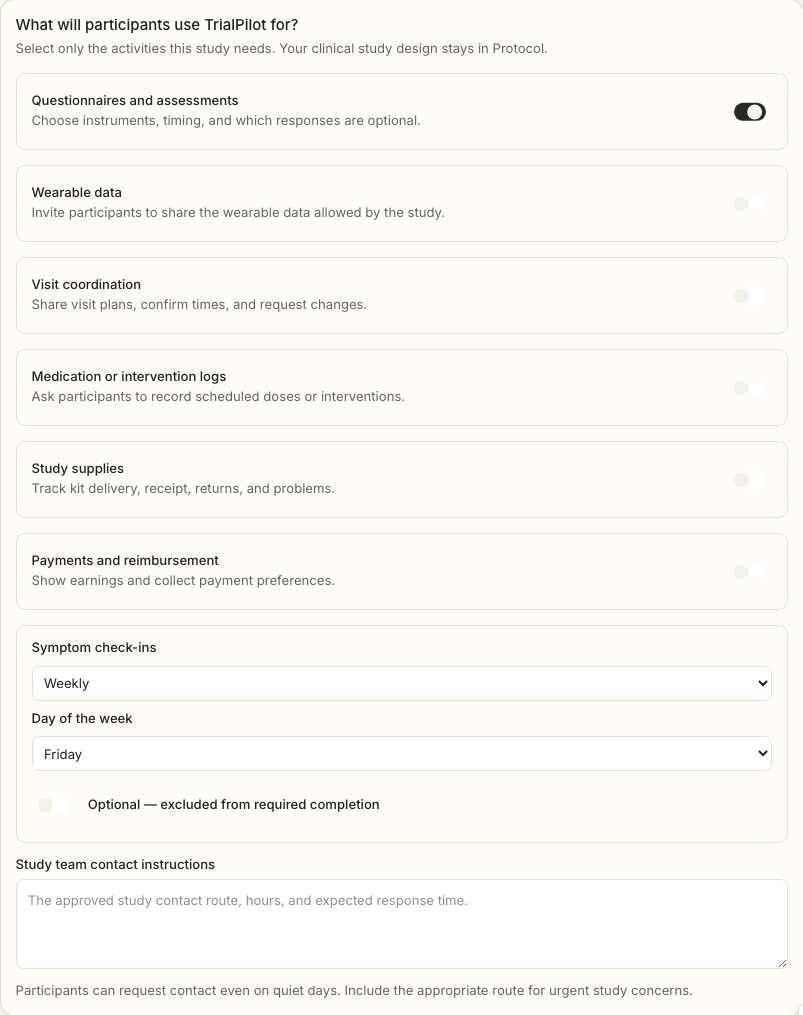
Configure questionnaires, check-ins, wearable sharing, visits, intervention logs, supplies, and payments. Optional work stays separate from required completion.
Sites can also link an already-enrolled participant to an approved app activity plan while preserving their original study timeline.
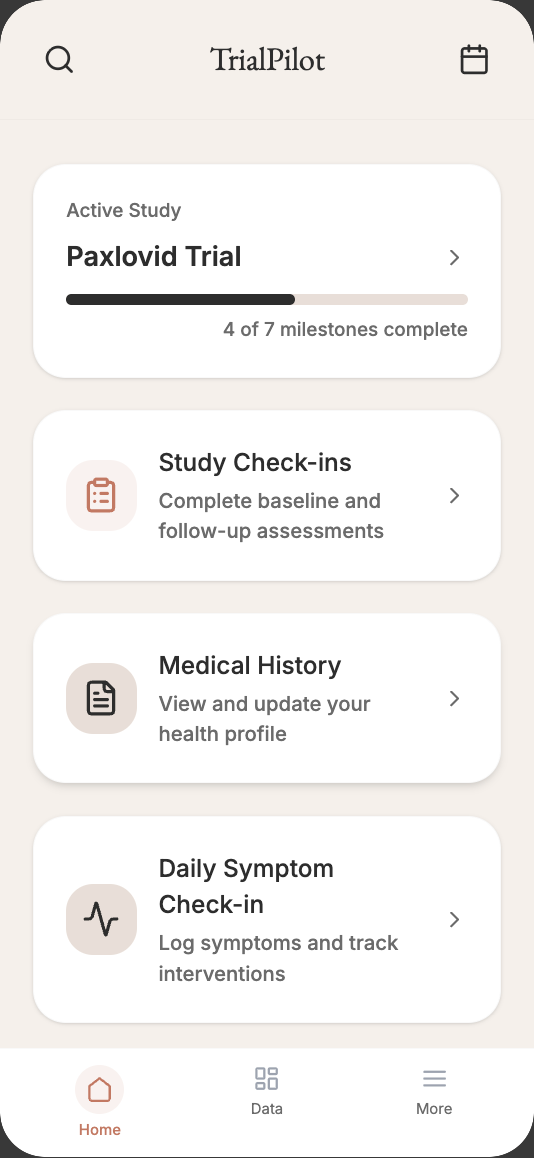
See what needs attention, what is coming up, what is waiting, and what is complete. Quiet weeks stay quiet, and saved-on-device work is clearly labeled until received.
The plan brings assigned activities, visits, kit updates, payment records, routine help requests, and released summaries together.
Offer approved home, site, or local-provider visit options. Participants can request an available alternative for the team to arrange.
Completed questionnaires stay complete when an arrangement changes. Provider availability and clinical suitability are confirmed by the site.
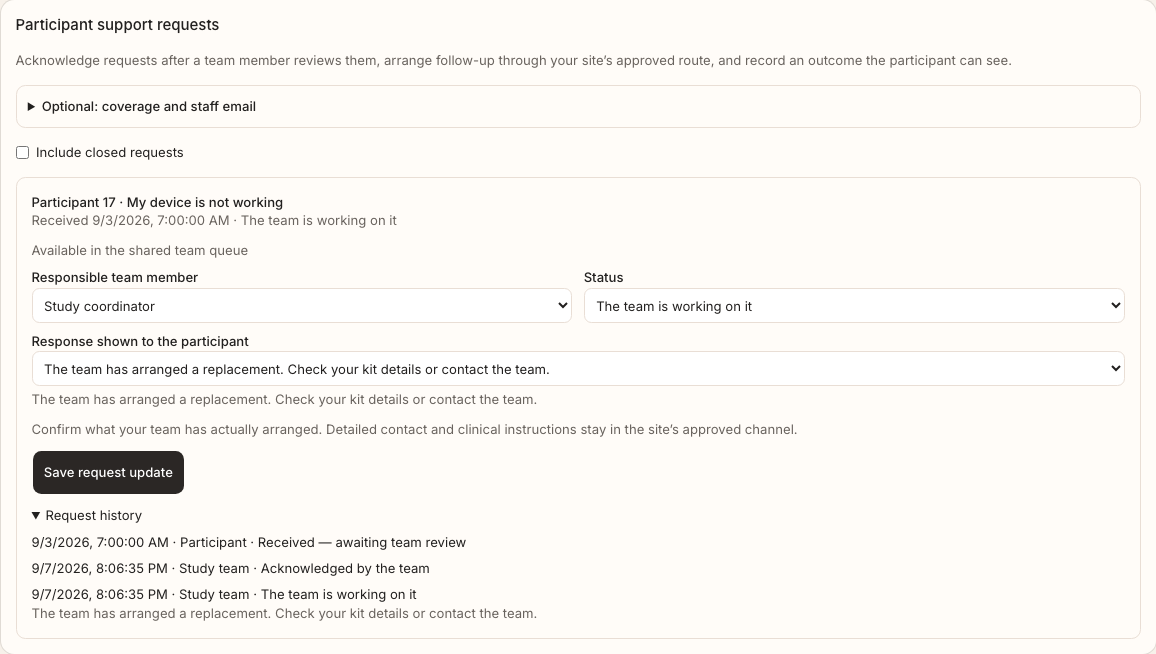
Give routine requests an owner, acknowledgment, status, and outcome. Participants can follow progress and reopen a request when they still need help.
Device, visit, kit, callback, and study questions stay distinct from urgent safety reporting. Staff email requires a configured delivery service.